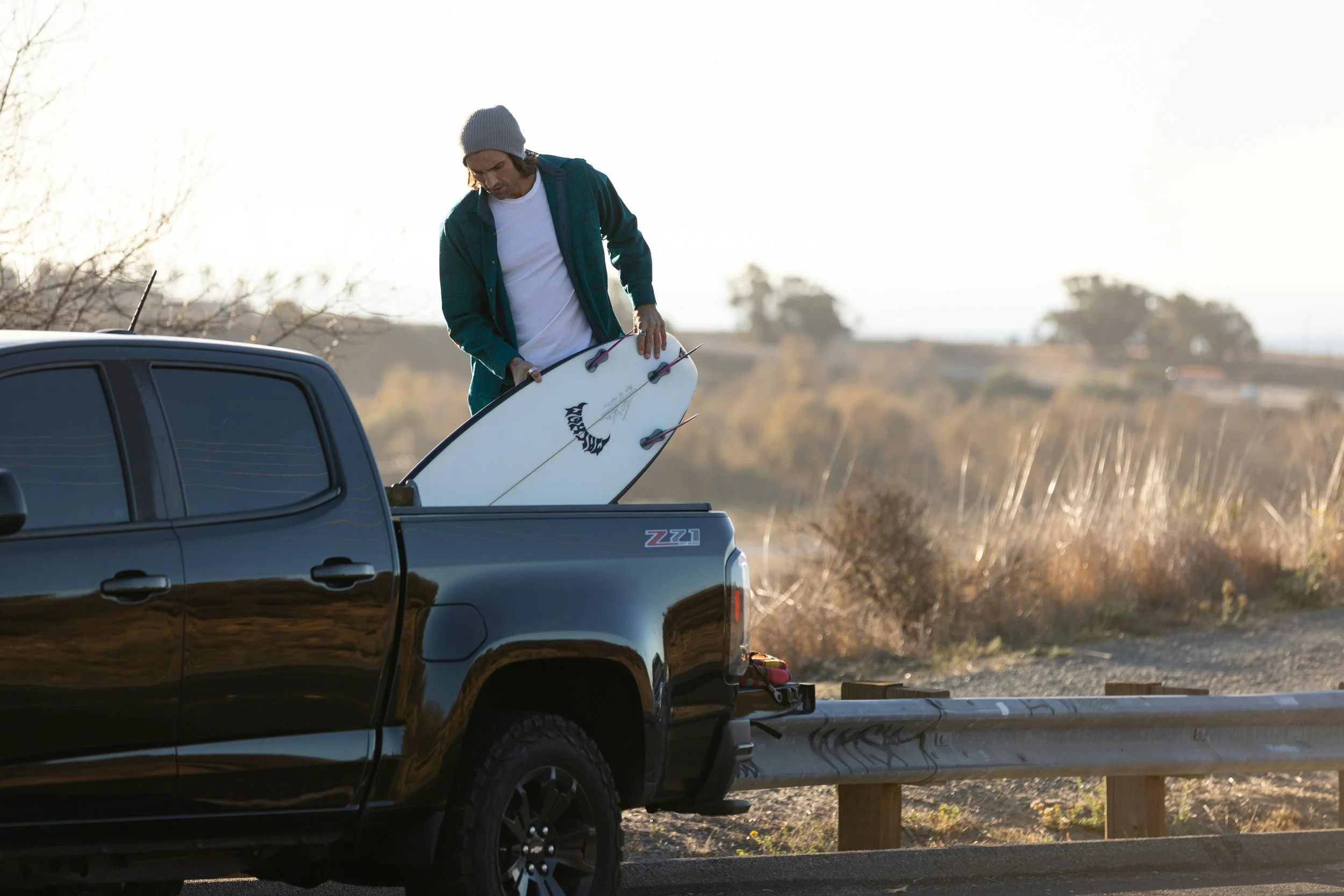
Surfing might not have been invented in San Clemente, but the town has a way of making it feel like it was.
Just south of the city, San Onofre became one of California’s early surf playgrounds. Its long, rolling waves were perfect for heavy redwood planks and, later, lighter foam boards. By the 1930s and ’40s, San Onofre wasn’t just a surf spot—it was a social scene. Families camped on the sand, ukuleles came out at night, and a culture that blended wave riding with community took root.
The Beach Boys even gave Onofre a shoutout in “Surfin’ U.S.A.,” solidifying its place in pop culture.
Then came Trestles.
The stretch of reef breaks just south of town put San Clemente on the world stage. Lower Trestles, in particular, became legendary for its consistent, high-performance waves—fast, hollow, and perfect for progression. By the 1970s, surfers from all over the globe were sneaking past Camp Pendleton fences to ride it.
Today, it’s no longer a secret and often serves as the final stop of the World Surf League Championship Tour, meaning the best surfers in the world regularly battle it out in San Clemente’s backyard.
But the city isn’t just about the breaks—it’s about the people who shaped them.
The postwar surf boom turned San Clemente into a hub for board makers, photographers, and magazines.
Surfing Magazine was headquartered here for decades, and The Surfer’s Journal still publishes just blocks from the beach.
Shapers experimented in dusty garages, creating designs that traveled the world. The culture wasn’t manufactured; it bubbled up naturally from locals who couldn’t stay out of the water.
And then there are the names every San Clemente surfer knows.
Greg Long grew up here before earning a reputation as one of the best big-wave riders alive, taking wins at Mavericks and the Eddie Aikau Invitational.
Colin McPhillips put San Clemente on the map in the longboard world with multiple world titles.
Kolohe Andino, practically raised at Trestles, carried the torch into modern competition, racking up junior titles before representing the U.S. on the World Tour and at the Tokyo Olympics.
And now Griffin Colapinto—the kid from El Camino Real—has turned into a global star.
Still living in town, he finished the 2023 WSL season ranked No. 3 in the world and secured his spot in the Paris 2024 Olympics. Watching him surf Trestles is a reminder that San Clemente isn’t just a surf town—it’s producing athletes at the highest level of the sport, right now.
The soul of all this history is preserved at the Surfing Heritage & Culture Center (SHACC), tucked into a warehouse on Calle Iglesia.
Inside, you’ll find everything from 100-year-old Hawaiian alaias to the shortboards that defined the ’80s. Their Surfing Timeline exhibit connects dots across centuries, making it clear that San Clemente’s role in surf culture isn’t an accident. SHACC doesn’t feel like a museum—it feels like stepping into the living memory of the sport.
What makes San Clemente special is how seamlessly surf culture blends with everyday life.
You’ll see groms skating down to the pier with boards under their arms, parents timing school pickups around tide charts, and pros slipping into the lineup at Trestles like it’s their neighborhood pool.
This isn’t the kind of history you leave in a book—it’s happening in the water every single day.
San Clemente may not have been the birthplace of surfing, but it’s one of the places where the sport grew up.
From mellow days at Onofre to world-title showdowns at Lowers, and from garage shapers to Griffin Colapinto chasing world titles, the city has woven surfing into its DNA. And if history has shown us anything, it’s that the next chapter will almost certainly be written on a San Clemente wave.